what would happen to a body immersed in crude oil
Oil is an ancient fossil fuel that we use to estrus our homes, generate electricity, and power large sectors of our economic system. But when oil accidentally spills into the ocean, it can cause big issues. Oil spills can harm bounding main creatures, ruin a day at the embankment, and make seafood unsafe to eat. It takes sound science to clean up the oil, measure out the impacts of pollution, and assist the sea recover.
What is oil?
Crude oil, the liquid remains of aboriginal plants and animals, is a fossil fuel that is used to make a broad range of fuels and products. Oil is found below ground or beneath the ocean floor in reservoirs, where oil droplets reside in "pores" or holes in the rock. Afterwards drilling down and pumping out the rough oil, oil companies transport it by pipes, ships, trucks, or trains to processing plants called refineries. In that location it is refined and so it tin be made into unlike petroleum products, including gasoline and other fuels besides as products similar asphalt, plastics, soaps, and paints.
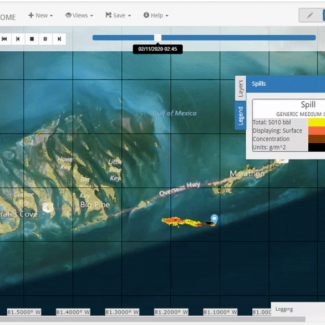
In the decade since the largest oil spill in American history, scientists have avant-garde lessons learned during the Deepwater Horizon response and cess to set up for future oil spill disasters.
How practice oil spills happen?
Oil spills are more common than yous might retrieve, and they happen in many different means. Thousands of oil spills occur in U.S. waters each twelvemonth. Near of these spills are small, for instance when oil spills while refueling a ship. But these spills can notwithstanding cause damage, especially if they happen in sensitive environments, like beaches, mangroves, and wetlands.
Large oil spills are major, unsafe disasters. These tend to happen when pipelines break, big oil tanker ships sink, or drilling operations become wrong. Consequences to ecosystems and economies can be felt for decades following a large oil spill.
Where practise oil spills happen?
Oil spills tin happen anywhere oil is drilled, transported, or used. When oil spills happen in the sea, in the Great Lakes, on the shore, or in rivers that menses into these littoral waters, NOAA experts may get involved. The Office of Response and Restoration'southward mission is to develop scientific solutions to keep the coasts make clean from threats of oil, chemicals, and marine debris.

Fear not! At that place are means to reduce your oil consumption without having to expedition several miles on foot through blizzard weather condition.
How do oil spills impairment or kill ocean life?
Where the oil is spilled, what kinds of plants, animals, and habitats are found there, and the amount and type of oil, amidst other things, can influence how much harm an oil spill causes. More often than not, oil spills harm ocean life in ii ways:
Fouling or oiling: Fouling or oiling occurs when oil physically harms a establish or animal. Oil can coat a bird's wings and leave information technology unable to fly or strip abroad the insulating properties of a bounding main otter's fur, putting it at gamble of hypothermia. The caste of oiling often impacts the animal'due south chances of survival.
Oil toxicity: Oil consists of many dissimilar toxic compounds. These toxic compounds tin cause severe health problems like heart damage, stunted growth, immune system furnishings, and even death. Our understanding of oil toxicity has expanded by studying the effects of the 2010 Deepwater Horizon oil spill.
Wildlife recovery, cleaning, and rehabilitation is oft an important part of oil spill response. Still wildlife is difficult to find and catch, oil spills can happen over wide areas, and some animals (similar whales) are too large to recover. Unfortunately, it'due south unrealistic to rescue all wildlife impacted during oil spills.
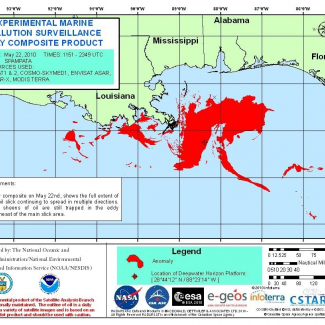
Ten years ago an experimental satellite-based Marine Pollution Surveillance Report programme was thrust into the national spotlight during the Deepwater Horizon oil spill. Since then, this program has grown in scale and accuracy, becoming an indispensable tool for oil spills of all sizes.
Who cleans upwardly an oil spill — and how?
The U.S Coast Guard is primarily responsible for cleaning up oil spills, while NOAA experts provide scientific back up to brand smart decisions that protect people and the surround. There are different equipment and tactics that trained experts can use to incorporate or remove oil from the environment when a spill occurs. Booms are floating concrete barriers to oil, which help keep it contained and abroad from sensitive areas, like beaches, mangroves, and wetlands. Skimmers are used off of boats and can "skim" oil from the sea surface. In situ burning, or setting fire to an oil slick, tin can burn the oil away at sea, and chemic dispersants can intermission up oil slicks from the surface.
Notwithstanding, cleanup activities can never remove 100% of the oil spilled, and scientists accept to be careful that their actions don't cause additional harm. After the Exxon Valdez oil spill in 1989, scientists learned that high-pressure, hot-h2o hoses used to make clean upward beaches caused more impairment than the oil lone. Sensitive habitats need extra consideration during oil spill cleanup.
Who pays for oil spill cleanup and restoration?
The Oil Pollution Act of 1990 established (amid other things) that those responsible for oil spills can be held responsible to pay for cleanup and restoration. This process of assessing the impacts of a spill and reaching a settlement to fund restoration projects is called Natural Resource Impairment Assessment (NRDA). Federal, state, and tribal agencies piece of work together with the party responsible for the oil spill throughout NRDA and select restoration projects with aid from the public.
Working with partners from state, tribal, and federal agencies and industry, NOAA helps to recover funds from the parties responsible for the oil spill, ordinarily through legal settlements. Over the last thirty years, NOAA has helped recover over $9 billion from those responsible for the oil spill to restore the bounding main and Keen Lakes.
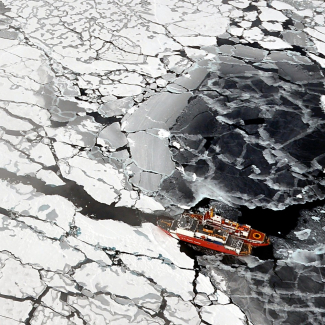
Vessel traffic and oil evolution have increased in the Arctic in response to warming oceans and failing sea ice. Anywhere oil is nerveless, transported, or refined at that place is a risk of oil spills. As ship traffic and oil development increase in the Arctic, the risk of oil spills besides increases.
How does NOAA help after an oil spill?
When a person gets sick, a medico evaluates their symptoms, diagnoses a problem, and then prescribes a handling to assistance them get meliorate. That'southward likewise what NOAA experts do after an oil spill: they evaluate what happened, assess the impacts, and so design restoration projects to assist the ocean recover. Restoration isn't the same as cleanup. It requires projects similar edifice marshland or protecting bird nesting habitat to actively bolster the environment.
Restoration projects are important because they speed upwardly the amount of time information technology takes for different species and habitats to recover. In improver to restoring habitats, the group responsible for the spill may besides be held accountable for restoring access to natural spaces by constructing parks, boat ramps, and fishing piers.
What are the largest marine oil spills in American history?
There are 3 oil spills that stand out in American history, each of which was the largest oil spill into American waterways at the time. In 1969, a blowout on an offshore platform off the coast of Santa Barbara, California, spilled over four one thousand thousand gallons of oil. In 1989, the Exxon Valdez oil tanker ran aground in the Prince William Sound in Alaska, spilling over 11 million gallons of oil.
The largest marine oil spill in all of U.S. history was the Deepwater Horizon spill. On Apr 20, 2010, an explosion occurred on the Deepwater Horizon drilling platform in the Gulf of United mexican states, killing 11 people. Before it was capped three months later on, approximately 134 one thousand thousand gallons of oil had spilled into the ocean. That is equivalent to the volume of over 200 Olympic-sized swimming pools. An $8.8 billion settlement for restoration was reached in 2016, and restoration is still continuing today.
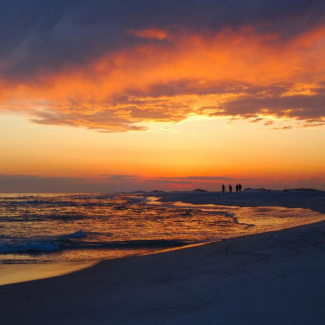
An oil spill science communicator for the Mississippi-Alabama Sea Grant Consortium shares her experiences as a resident of the Gulf of United mexican states during Deepwater Horizon, and what she's learned since then.
Didactics CONNECTION
Though we tend to exist the most familiar with the massive incidents similar Deepwater Horizon, did y'all know that thousands of smaller oil spills occur each year, some spilling less than a barrel of oil? Oil spills, in add-on to nonpoint source pollution, threaten our ocean ecosystem. Learning nigh pollution, as well as our role in our ecosystem, can assistance protect ocean habitats past improving stewardship behaviors.
Source: https://www.noaa.gov/education/resource-collections/ocean-coasts/oil-spills

Post a Comment for "what would happen to a body immersed in crude oil"